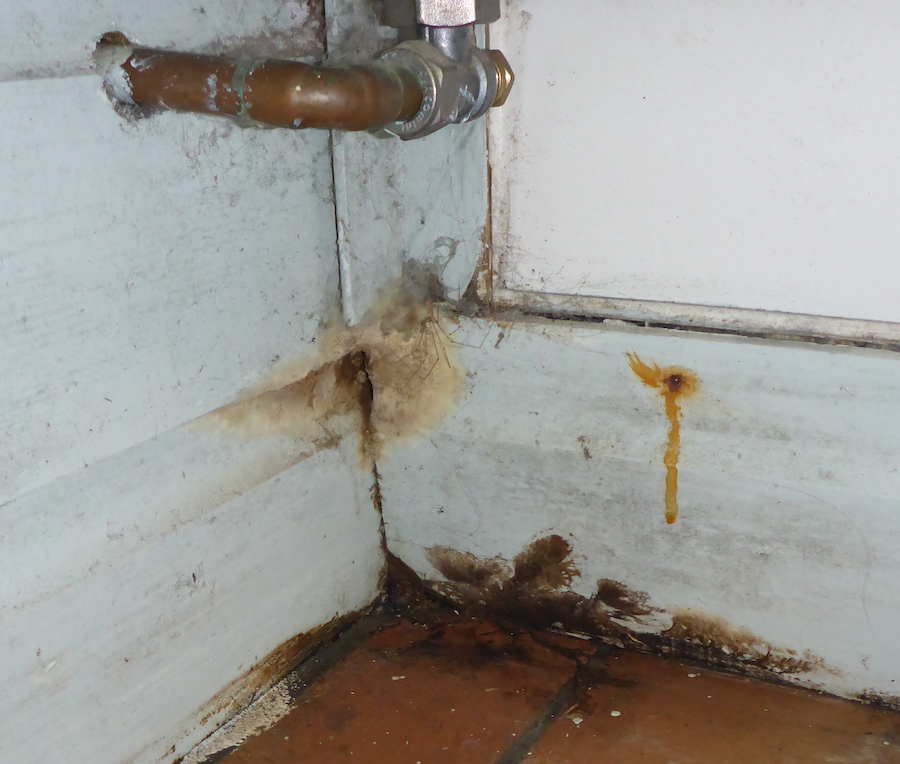

I was called to carry out inspections in a quaint property in Looe, Cornwall, after the owner expressed concerns over visual signs of damp. Within minutes of conducting the survey I found dry rot which is considerably more serious than damp.
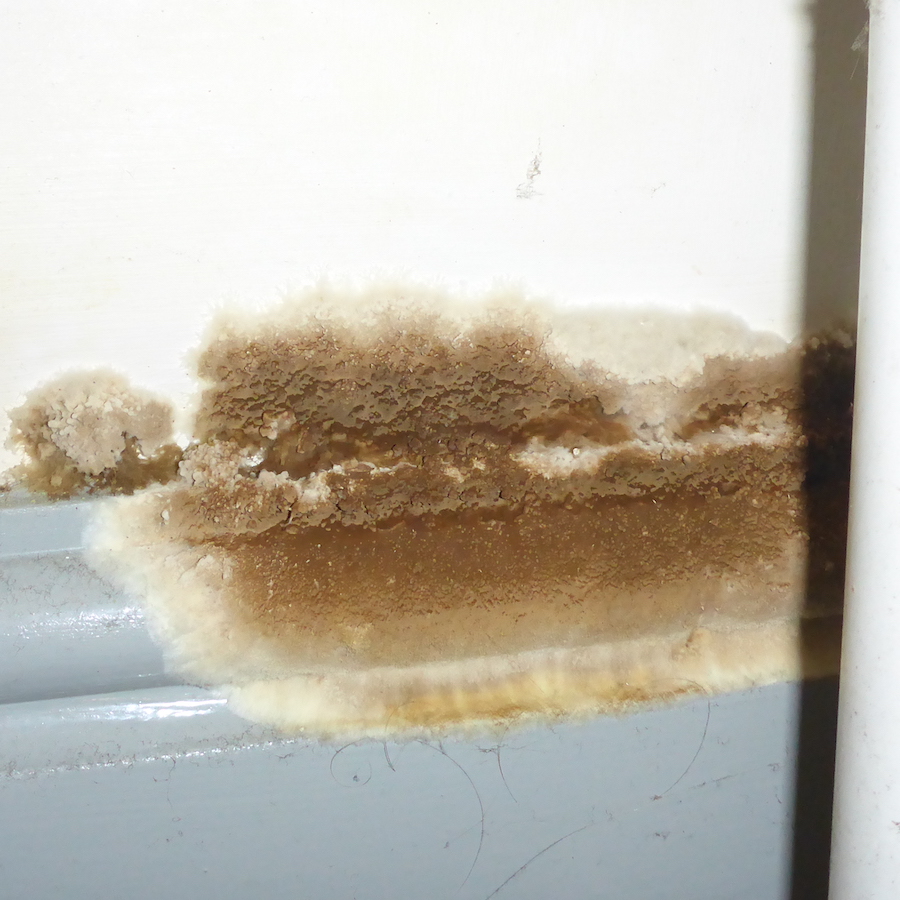
The client called regarding concerns of damp mentioning tea stains on walls, salting, general discolouration so they arranged an initial inspection (this is non invasive). I found that there was Mycelium (which looks a little like cotton wool) which is evidence of early stages of dry rot, this was located on a skirting board near a leaking shower. I send a report of my findings and recommendations which included an urgent secondary survey for dry rot which would be invasive. The client made arrangements for me to return 6 weeks later with their builder who was there to quote for preparation works as per my report. Upon arrival the first area inspected was the bedroom adjoining the bathroom. Upon the stud wall that that divides bedroom/bathroom a fresh and larger area of dry rot was observed on the wall opposite the shower where the original outbreak was first noted.
Left unattended over 6 weeks we saw the dry rot grow quite significantly from where the eye could see, one can only imagine the spread of growth within the stud wall. I cannot stress enough the urgency of dealing with dry rot as soon as it’s found, if you have any evidence of damp then catching such issues early will without doubt save considerable expense.