
As an independent surveyor, there is no attempt made to sell any products, chemicals, or remedial service; I provide honest, un-biased opinions upon issues found during a range of inspections.
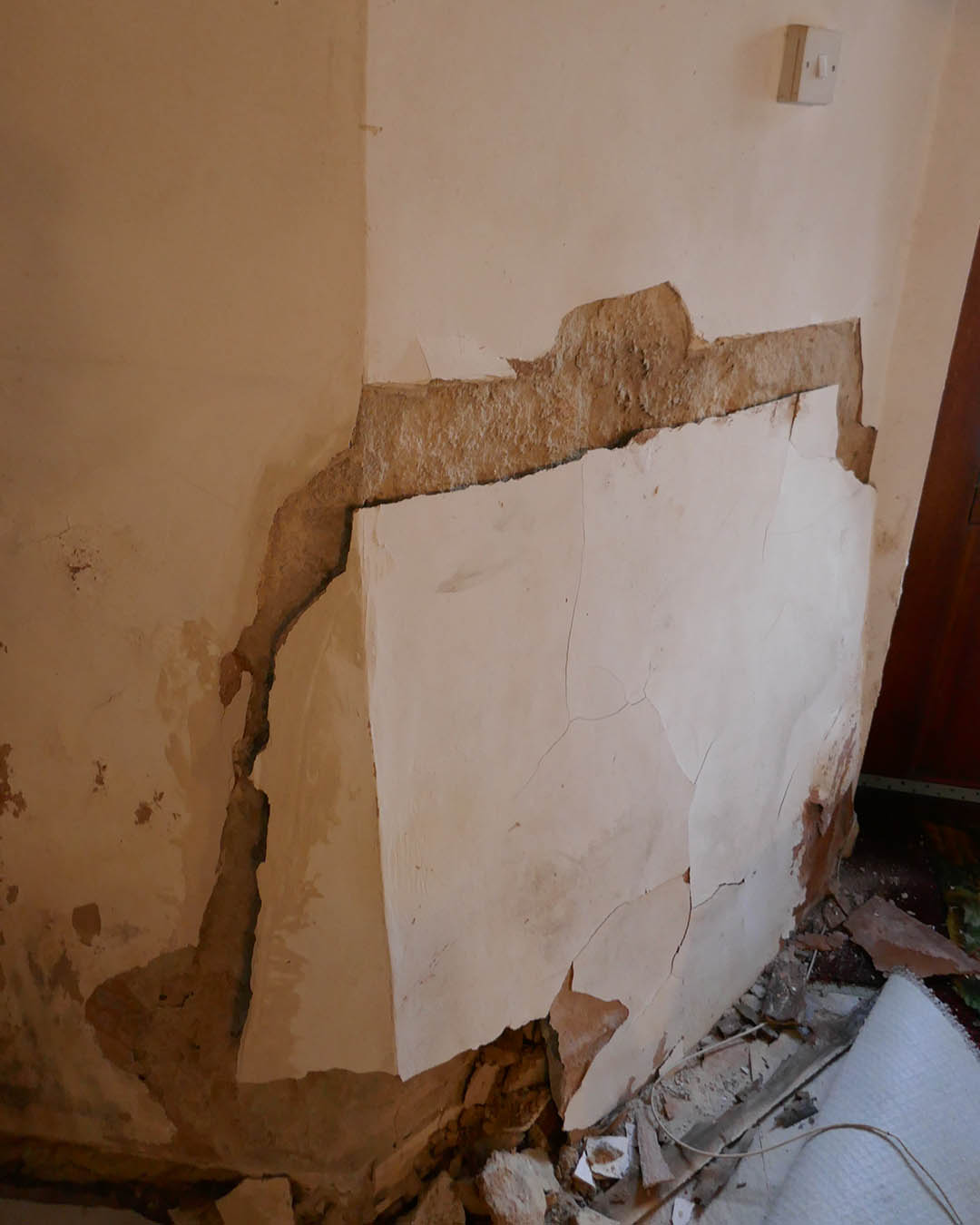
Dampness can be present in and around most buildings and can lead to widespread damage of fixtures, fittings, furniture, clothing, decoration, wall/ceiling plaster, skirting/flooring boards etc. It can cause extensive decay of structural timbers, and early degradation of building fabric which can ultimately result in collapse of the structure.
A beeping, flashing damp meter* does not simply suggest you have rising damp and moisture can be present as a result of several issues such as: defective rainwater goods, inappropriate material usage, high humidity/condensation, rainwater penetration, lateral penetration from high external ground levels, or even a result of a plumbing leak or defective drainage facilities. It is not uncommon for a combination of one or more of the above issues to cause dampness within a building.
If you are looking to buy a house, or you’ve made a house your home, dampness in its many forms, needs to be accurately identified to enable correct methods of control to be implemented.
Not all damp issues are clear to see; this can mean unforeseen additional costs for the home-buyer, and of course, extensive delays to the all important moving-in date.
Also for the home-buyer, an unbiased, fact-based report can provide a suitable negotiation tool.
* Damp meters (electrical conductivity meter) are designed to provide accurate moisture content in timbers, thus determining if decay and/or infestation is possible. Used elsewhere, sometimes requiring various proprietary accessories, they can detect the presence of dryness, and be useful in determining dampness within other building fabrics; however, experience is required as meter readings can be ‘falsely-high’ under certain circumstances which could lead to mis-diagnosis and incorrect recommendations for remedial measures. Several other professional grade devices are also used to help provide an overall picture of the type of damp and any related defects that may be present.
For minor issues, on-site consultations are sometimes all that is required without the need of a report. For all other surveys, a detailed report is complied which includes ‘next-step’ recommendations; a separate images document is created to provide further clarification of issues present. Also included are post-report discussions to ensure the content is fully understood.